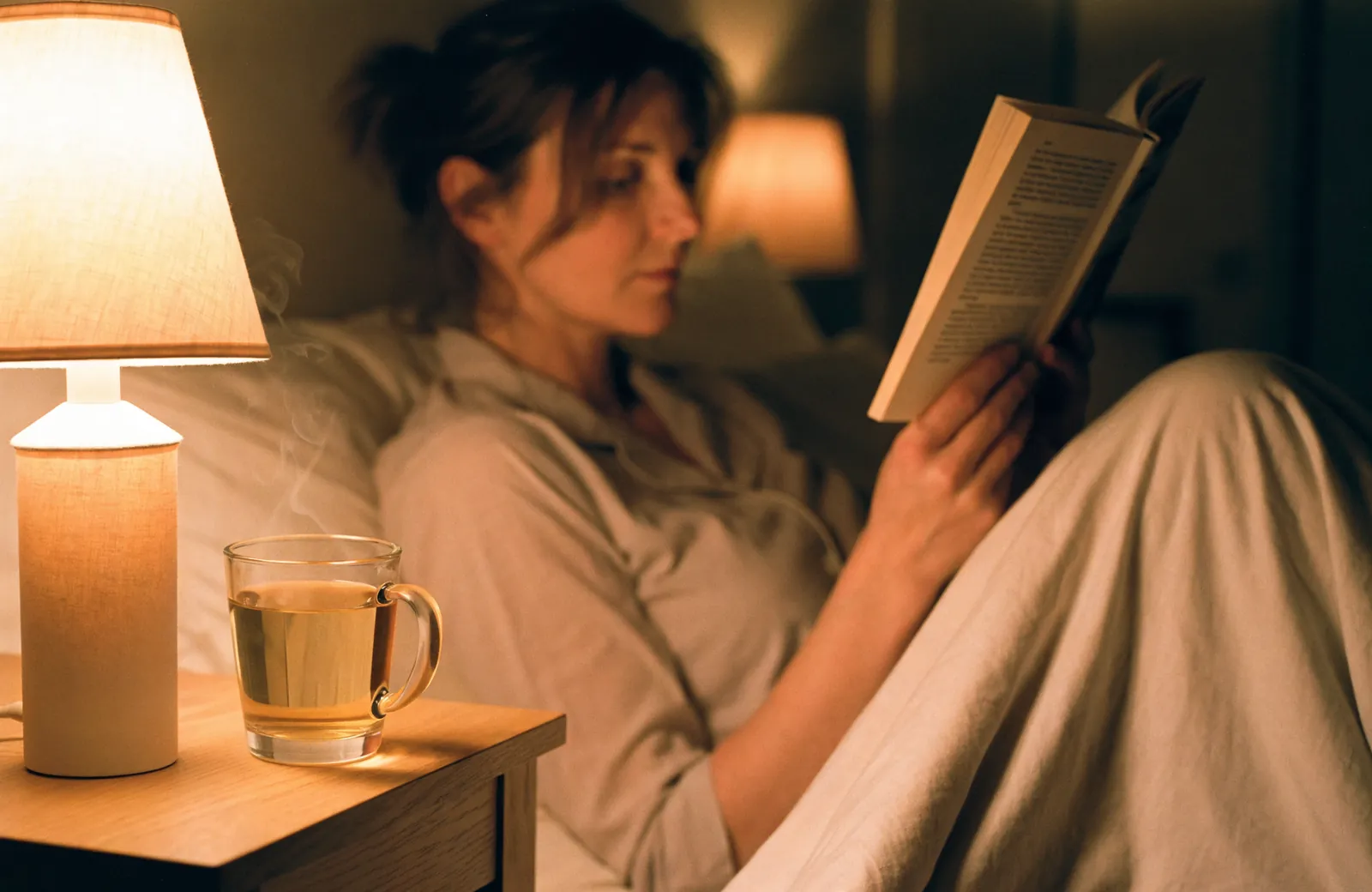
Sleep tea for adults: how to choose one
It is past midnight, you have an early start tomorrow, and sleep just won't come. By morning you want something gentle that doesn't need a prescription, and the first thing that comes to mind is a herbal sleep tea. The trouble is, it is not clear which one helps, or whether any of them do.
Here we take it step by step: what to check before you choose a tea, when a cup on its own is no longer enough, and what is known about lemon balm, lavender, chamomile, valerian and passionflower.
First, what gets in the way of sleep
Before you choose a tea, think back over your evening. The cause of poor sleep often lies there.
Caffeine. In adults, the body clears half of the caffeine in about four hours on average, and in some people it takes twice as long. So coffee you drink during the day is still working by the evening. The same goes for strong black and green tea, cola and chocolate. A large dose of caffeine taken six hours before bed cuts sleep by more than an hour, and you may not even notice.
Alcohol. A glass of wine makes it easier to fall asleep, but sleep is broken more often in the second half of the night.
Screens before bed. If you read on a tablet before bed rather than from a paper book, you fall asleep later, your body produces less melatonin, the hormone that prepares it for sleep, and you feel noticeably less alert in the morning.
A large mug at bedtime. This applies to herbal tea too. If you drink a lot of fluid right before bed, you will have to get up in the night, and your sleep will be interrupted. It is better to have your tea an hour to an hour and a half before you go to bed.
Some signs mean you should see a doctor straight away. Loud snoring, pauses in breathing during sleep noticed by those close to you, and severe daytime sleepiness can point to sleep apnoea. Unpleasant sensations in the legs in the evening and at night that make you want to move them may be restless legs syndrome. In that case, a doctor will always check your iron stores.
When insomnia drags on
If you find it hard to fall asleep, or wake in the night or too early, at least three times a week for more than three months, and it affects you during the day, doctors call this chronic insomnia. The main treatment is cognitive behavioural therapy for insomnia (CBT-I). This means several sessions with a specialist or a structured course, which can also be online, in which your sleep routine and the way you think about sleep are gradually changed. Herbal remedies are not recommended for treating insomnia, as there is not enough evidence that they work.
An evening cup makes sense when your sleep is thrown off only now and then, after a stressful day. Insomnia that has gone on for a long time is better discussed with a specialist.
Lemon balm, lavender, chamomile, valerian, passionflower
In Europe, lemon balm, lavender, valerian and passionflower have a recognised traditional use for mild stress and to help with falling asleep. Traditional means the plant has been used safely for at least thirty years and its effect is plausible, but there is not enough clinical evidence for full recognition. These assessments apply to medicinal products with a set dose and do not carry over directly to herbal tea sold as food.
Lemon balm. Few studies have looked specifically at sleep, and they are small. Its effect on anxiety has been studied more: lemon balm may reduce it, although there is still little data. And anxiety and poor sleep often go hand in hand.
Lavender. The evidence that lavender improves sleep comes from inhaling the essential oil and from lavender oil capsules. There is no convincing evidence for lavender tea.
Chamomile. This is the most popular evening tea, even though helping you fall asleep is not among chamomile's recognised uses. It is used for mild digestive complaints, cold symptoms, inflammation of the mouth and throat, and skin irritation. In studies, chamomile improved sleep quality, but the trials were small, and some of them used an extract in capsules rather than tea. When new mothers drank chamomile tea for two weeks, their sleep was less disturbed by physical discomfort, but by the end of the month the difference had gone. Apigenin from chamomile binds to the same brain receptors as benzodiazepine sedatives, but this has only been shown in laboratory experiments and in mice.
Valerian. It has been studied more than the other plants. People taking valerian are more likely than those given a placebo to say they sleep better. But when sleep is measured in numbers, such as how many minutes it takes to fall asleep, there is no difference. Valerian works gradually and is taken for two to four weeks, so it is no use as a remedy for a single night.
Passionflower. When healthy young adults drank a cup of passionflower tea at bedtime for a week, only one of all the sleep measures improved: how they themselves rated their sleep quality.
All these plants act gently, and the difference is something you are more likely to feel than instruments are to record. Don't expect them to work like a sleeping pill, and tea does not cure insomnia. What a warm, caffeine-free tea can easily become is part of an evening ritual, after which you put your phone away and get ready for bed.
How to choose a sleep tea
First, look at the ingredients: there should be no caffeine, which means no black or green tea, mate or guarana. Beyond that, the choice depends on your taste and on any medicines you take.
Apotheke Sleep and Relax Tea with Vitamin B3 is based on lemon balm, with added lavender, St John's wort and lemongrass. A cup provides niacin (vitamin B3), which contributes to normal psychological function and to the normal functioning of the nervous system. Bear in mind that this tea contains St John's wort. There is not much of it, but St John's wort can weaken the effect of contraceptive pills, warfarin and a number of other medicines, and taken with some antidepressants it can increase their side effects. If you take medicines regularly, check with your doctor or pharmacist.
Apotheke BIO Tea for joy is a gentle organic blend of chamomile, fennel, mint, strawberry leaf and rosehip. If you are allergic to plants of the daisy family (Asteraceae), such as ragweed or mugwort, it is best to avoid chamomile.
If you are pregnant or breastfeeding, lemon balm, lavender, valerian, passionflower, fennel and liquorice are not recommended, as there is not enough data on their safety.
If your sleep has not improved within a few weeks despite calm evenings and no coffee after lunch, see your family doctor. And if you are not sure which tea is right for you, write to us and we will be happy to help.