Is capsule coffee real coffee? What's actually inside
For many of us, capsule coffee has long been part of the morning routine: one press of a button, and half a minute later there's an espresso with crema in the cup. But the convenience often raises doubts: can something this simple really be proper coffee? Maybe the capsule holds some kind of powder, or a blend with additives?
We decided to take a calm, factual look at what's inside the capsule, why the coffee in it keeps its aroma, what the crema tells you and how caffeine is removed from coffee. Everything below is based on scientific research and manufacturers' data.
In short: yes, it's real coffee
An espresso capsule contains roasted ground coffee – exactly the same coffee that is sold in ordinary packs, just measured out in advance for a single cup. How good it is, though, depends on the beans themselves and on how well the packaging protects the coffee from air. Let's take these one at a time.
Ground, not instant
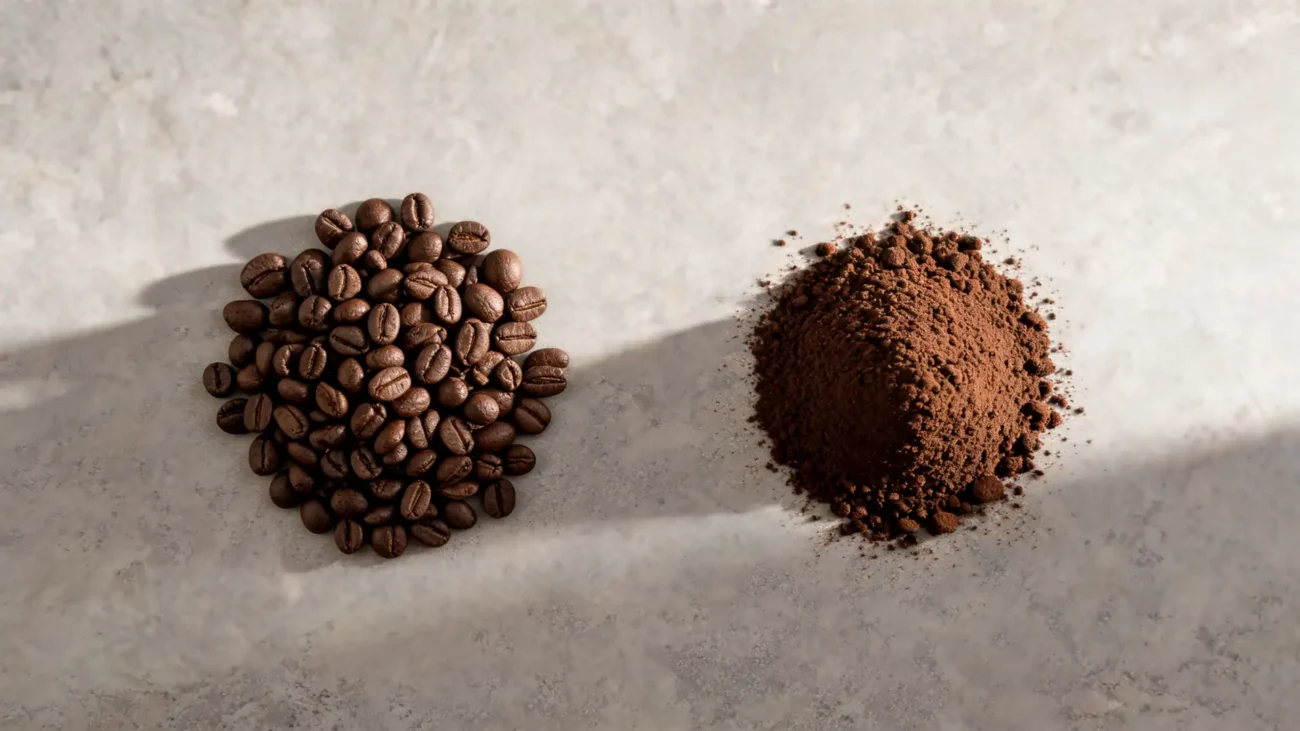
For espresso, coffee is ground very finely, so the contents of a capsule really do look like powder. That is probably where most of the suspicion comes from. But it's a completely different product. Instant coffee is made from coffee that has already been brewed and then dried, which is why it dissolves completely in water. Ground coffee behaves differently: it releases its flavour and aroma into the water, while the coffee itself stays behind in the capsule as grounds.
Why capsule coffee doesn't go stale
Aroma is the most delicate part of coffee. During roasting, carbon dioxide forms inside the bean. Some of it stays trapped in the bean's pores and escapes gradually during storage, but grinding releases it almost at once. Aromatic compounds escape along with the gas, and what remains is slowly oxidised by the air. That is why an open pack of ground coffee loses its aroma much faster than whole beans. The process has been measured in detail at the coffee laboratory of the Zurich University of Applied Sciences (ZHAW).
A capsule solves this problem simply: each portion stays sealed until the moment you brew it. The same laboratory monitored coffee in capsules from different systems for almost a year and came to a clear conclusion: freshness depends on how well the packaging keeps out oxygen. Materials with an aluminium layer do this best. That is why aluminium-free capsules, such as paper ones, come in airtight outer packaging, either filled with protective gas or vacuum-sealed – and once opened, the pack is best kept tightly closed.
The crema shows how fresh the coffee is
Crema, the thick foam on top of an espresso, forms from the carbon dioxide that hot water under pressure drives out of the ground coffee, and from tiny droplets of coffee oils. Ernesto Illy and Luciano Navarini, who wrote a scientific review dedicated to crema, describe carbon dioxide as the key factor in this process. This leads to a simple observation: stale coffee has very little gas left, so the crema comes out thin and quickly collapses. A thick, lasting crema is one of the signs that the coffee has kept its freshness.
Arabica is a descendant of robusta
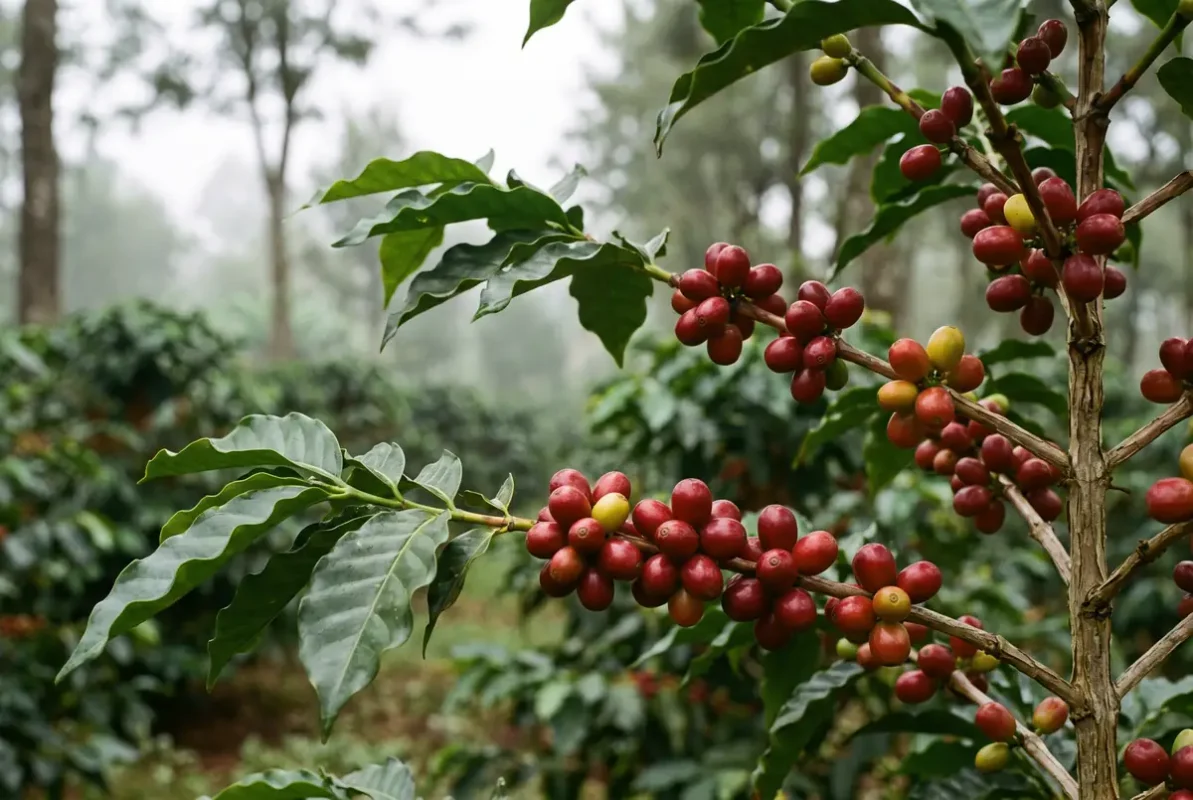
Arabica and robusta are often set against each other, although they are in fact close relatives. In 2024, an international team of scientists sequenced the complete arabica genome and published the work in Nature Genetics. The study confirmed that arabica arose hundreds of thousands of years ago, when two species crossed in the wild – an ancestor of robusta (Coffea canephora) and the wild Coffea eugenioides. The genetic diversity of arabica has remained very low ever since: even before humans began to cultivate it, the species went through several so-called bottlenecks.
One of the noticeable differences between them is caffeine: robusta contains more of it. For the plant itself, caffeine is a means of defence. As early as 1984, a study published in Science showed that, at the concentrations found in plants, caffeine and related compounds suppress insects' appetite and act as a natural pesticide. Robusta tastes more bitter and has more body, while arabica is milder, with a pleasant acidity. That is why blends with robusta are usually chosen for coffee with milk, and pure arabica for black coffee.
How caffeine is removed from coffee
Caffeine is extracted from green, unroasted beans. There are three methods: organic solvents (dichloromethane or ethyl acetate), compressed carbon dioxide or water. Solvents are permitted in the EU, but with strict limits on residues in the finished coffee. The method is not always stated on the packaging, so if it matters to you, it's worth checking the manufacturer's description.
What's in our coffee capsules
The coffee at BioValik comes from two family-run roasters – Rombouts from Belgium and Malongo from France. The Rombouts story began in 1896 in Antwerp. Since 1966, the company has supplied coffee to the Belgian royal court, and it is still family-owned. Malongo has belonged to the same family of roasters since 1968.
- Just coffee. Inside is ground coffee with no flavourings, milk powder or sugar.
- Aluminium-free. The coffee is wrapped in plant-fibre paper with a cardboard ring, and the outer packaging protects it from oxygen: a protective atmosphere for Rombouts, a vacuum for Malongo.
- Organic and fairtrade. Half of our coffees are certified organic and fairtrade.
- Decaffeinated with water. According to the manufacturer, the caffeine in Rombouts Deca Aqua is removed with water. It is an organic arabica you can happily drink in the evening too.
- For every taste. Mild Purs Matins arabica for the morning, rich Ristretto made from arabica and robusta, and the darker-roasted Italian Style for coffee with milk.
Compatibility. Our capsules fit Rombouts and Malongo 1.2.3 Spresso coffee machines. If you're not sure which machine you have, write to us and we'll be happy to help.
Frequently asked questions
Can you brew capsule coffee without a coffee machine?
Yes – there is ordinary ground coffee inside, and you can brew it in a cezve or a French press. There is just one thing worth knowing. Coffee oils contain cafestol and kahweol, compounds that raise ‘bad’ cholesterol. A paper filter holds them back, but a cezve, a French press and boiled coffee do not. The effect is well studied: a review by Dutch researchers Urgert and Katan was published back in 1997. So if you are watching your cholesterol, it's best to keep unfiltered coffee for special occasions.
How long does capsule coffee keep?
Unopened, it keeps until the date given by the manufacturer. Once opened, the packaging no longer protects the coffee from air as well, and the aroma gradually fades, so it's best not to keep an open pack for too long.
Is capsule coffee worse than coffee from beans?
Freshly ground beans smell the strongest, but only in the first few minutes after grinding. Ground coffee from an open pack, on the other hand, falls short of both whole beans and a well-sealed capsule. A capsule keeps the coffee as it was after grinding, as far as the packaging allows.